No. 655中文
What does this sign, marking, or signal mean?
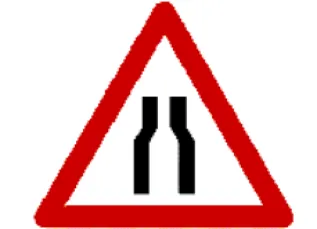
- Narrow road. Correct answer
- Narrow bridge.
- Fork road.
No. 656中文
What does this sign, marking, or signal mean?
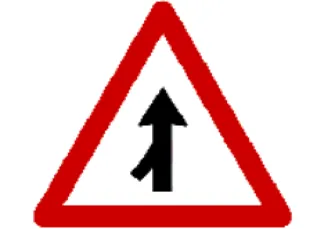
- Fork road.
- Narrow bridge.
- Ramp merging. Correct answer
No. 657中文
What does this sign, marking, or signal mean?
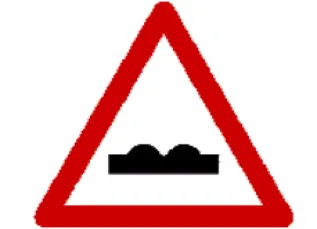
- Bumpy road surface. Correct answer
- Raised road surface.
- Depressed road surface.
No. 658中文
What does this sign, marking, or signal mean?
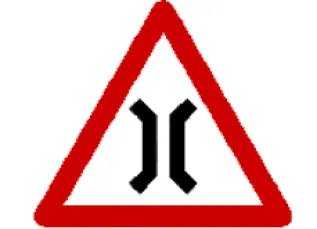
- Fork road.
- Narrow bridge. Correct answer
- Narrow road.
No. 659中文
What does this sign, marking, or signal mean?
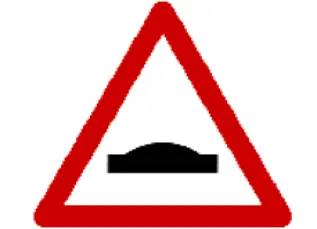
- Bumpy road surface.
- Steep uphill.
- Raised road surface. Correct answer
No. 660中文
What does this sign, marking, or signal mean?
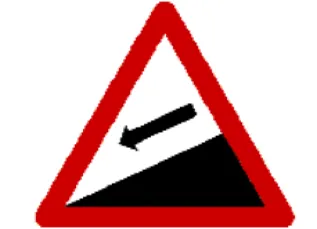
- Steep downhill. Correct answer
- Steep uphill.
- Wharf.
No. 661中文
What does this sign, marking, or signal mean?
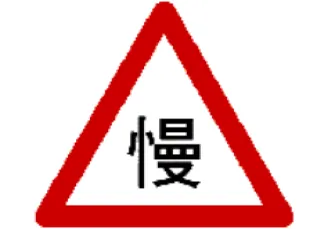
- Stop and go.
- Yield.
- Slow down. Correct answer
No. 662中文
What does this sign, marking, or signal mean?
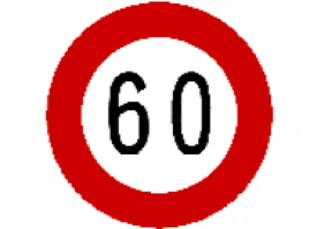
- Minimum speed limit.
- Maximum speed limit. Correct answer
- Vehicle gross weight limit.
No. 663中文
What does this sign, marking, or signal mean?
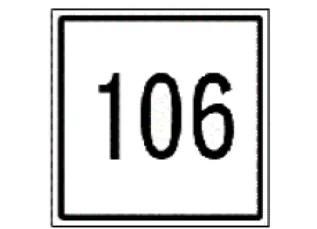
- Provincial highway route number.
- City/county road route number. Correct answer
- National highway route number.
No. 664中文
What does this sign, marking, or signal mean?
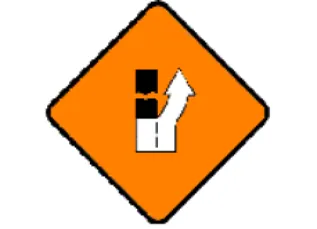
- Right lane closed.
- Left lane closed. Correct answer
- Detour.
No. 665中文
What does this sign, marking, or signal mean?
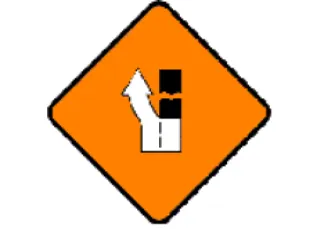
- Right lane closed. Correct answer
- Left lane closed.
- Detour.
No. 666中文
What does this sign, marking, or signal mean?
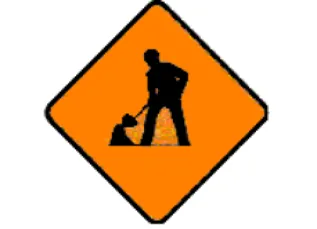
- Road closed.
- Detour.
- Road construction. Correct answer
No. 667中文
What does this sign, marking, or signal mean?
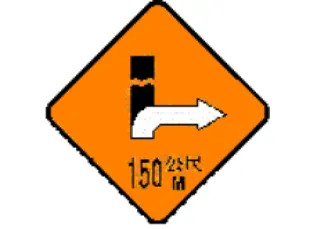
- Left lane closed.
- Right lane closed.
- Detour. Correct answer
No. 668中文
What does this sign, marking, or signal mean?
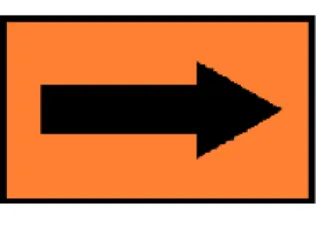
- Detour direction indicator. Correct answer
- One-way road.
- Right turn direction indicator.
No. 669中文
What does this sign, marking, or signal mean?
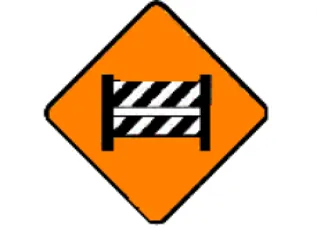
- Road construction.
- Road closed. Correct answer
- Detour.
No. 670中文
The white horizontal solid line is:
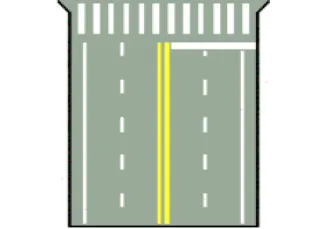
- Vehicle parking line.
- No-passing line.
- Stop line. Correct answer
No. 671中文
The yellow double solid line is:
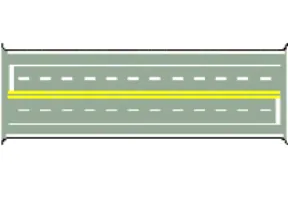
- Directional restriction line. Correct answer
- No lane-change line.
- Lane line.
No. 672中文
What does this sign, marking, or signal mean?
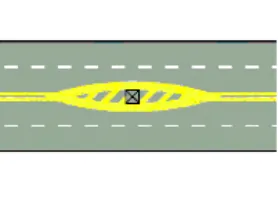
- Road center obstacle line.
- Obstacle approach line. Correct answer
- Road width change line.
No. 673中文
The grid line shown indicates that vehicles within this marked area:
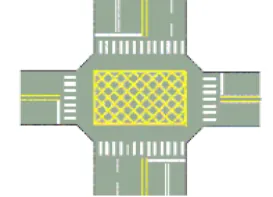
- May stop temporarily.
- Must not stop temporarily. Correct answer
- Must not park.
No. 674中文
What does this sign, marking, or signal mean?
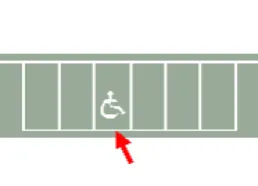
- Disabled parking space. Correct answer
- Stop line.
- No-parking line.
No. 675中文
Left arm extended downward, palm facing backward, indicates:
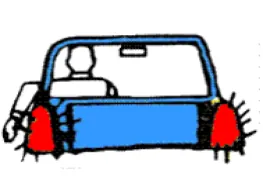
- Slow down / temporary stop. Correct answer
- Allowing rear vehicle to overtake.
- Reversing.
No. 676中文
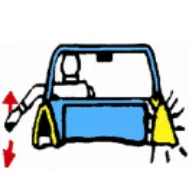
Left arm extended downward at 45 degrees, palm forward and waving back and forth, indicates:
- Reversing.
- Slow down.
- Allowing rear vehicle to overtake. Correct answer
No. 677中文
What does this sign, marking, or signal mean?
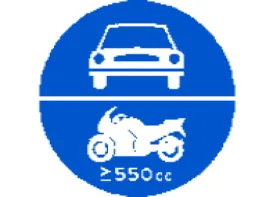
- Road designated for cars (4+ wheels) and heavy motorcycles (550cc+). Correct answer
- Road designated for bicycles and motorcycles.
- Road prohibiting cars (4+ wheels) and heavy motorcycles (550cc+).
No. 678中文
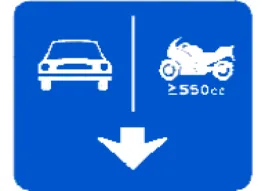
What does this sign, marking, or signal mean?
- Lane designated for cars (4+ wheels) only.
- Lane designated for cars (4+ wheels) and heavy motorcycles (550cc+). Correct answer
- Lane designated for heavy motorcycles (550cc+) only.
No. 679中文
What does this sign, marking, or signal mean?
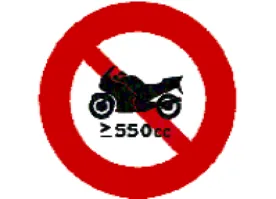
- No heavy motorcycles (550cc+) allowed. Correct answer
- Heavy motorcycle (550cc+) exclusive lane.
- No bicycles allowed.
No. 680中文
What does this sign, marking, or signal mean?
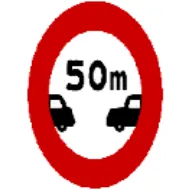
- Vehicle length limit.
- Maximum speed limit.
- Minimum safe following distance. Correct answer
No. 681中文
What does this sign, marking, or signal mean?
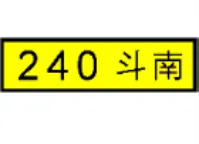
- Freeway/expressway interchange name. Correct answer
- Place name and mileage.
- Freeway/expressway exit distance.
No. 682中文
What does this sign, marking, or signal mean?
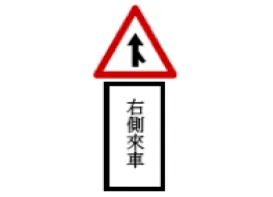
- Merging traffic from the right ahead. Correct answer
- Merging traffic from the left ahead.
- Fork road.
No. 683中文
Maximum speed limit on exit ramp:
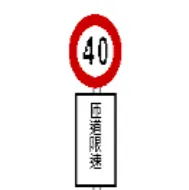
- 60 km/h.
- 40 km/h. Correct answer
- 80 km/h.
No. 684中文
This sign is a(n):
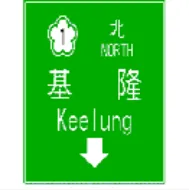
- Exit.
- Lane. Correct answer
- Place name. directional sign.
No. 685中文
What does this sign, marking, or signal mean?
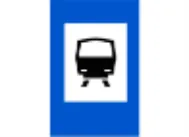
- Metro (MRT) station. Correct answer
- Railway station.
- High-speed rail station.
No. 686中文
This sign is a:
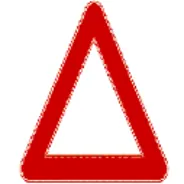
- Warning sign.
- Vehicle breakdown sign. Correct answer
- Construction sign.
No. 687中文
This sign indicates:
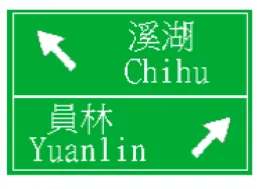
- Place name and mileage.
- Direction and mileage.
- Place name and direction. Correct answer
No. 688中文
Indicating:
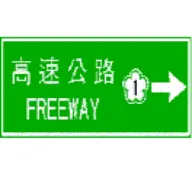
- Highway exit.
- Highway service area.
- Highway guide sign. Correct answer
No. 689中文
This signal is:
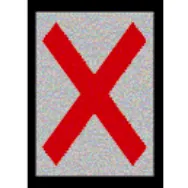
- A lane control signal, indicating that this lane is closed. Correct answer
- A road fork ahead.
- A traffic control signal.
No. 690中文
This sign is a:
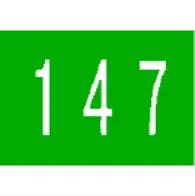
- Milestone.
- Mileage marker. Correct answer
- County road route number.
No. 691中文
A vehicle owner who has received a license plate but does not display it, or does not display it in the designated position, shall be subject to:
- A fine and license plate suspension.
- A fine and license plate revocation.
- A fine, impoundment of the vehicle on the spot, and license plate revocation. Correct answer
No. 692中文
When driving on a flooded road and you sense 'aquaplaning' (tires losing traction and floating on water), what should you do?
- Immediately press the brake hard to try to increase resistance.
- Hold the steering wheel firmly, maintain a straight line, and slowly release the accelerator — do not brake suddenly. Correct answer
- Press the accelerator hard to drive out of the flooded area.
No. 693中文
If a tire suddenly blows out while driving, which of the following reactions is 'incorrect'?
- Grip the steering wheel tightly and maintain a straight course.
- Immediately slam on the brakes to stop the vehicle in the shortest possible distance. Correct answer
- Slowly release the accelerator and look for a safe place to pull over.
No. 694中文
When driving on a road and maintaining a safe following distance, if the vehicle ahead suddenly decelerates or brakes, what is the minimum safe following distance required?
- Enough for the driver's reaction distance plus braking distance. Correct answer
- Enough for the driver's reaction distance only.
- Enough for the driver's braking distance only.
No. 695中文
When driving a vehicle on the road, which of the following behaviors should a driver avoid?
- Maintaining a proper safe distance from the vehicle ahead.
- Paying attention to conditions ahead.
- Changing lanes arbitrarily. Correct answer
No. 696中文
When driving in rainy conditions where the road surface is slippery and the vehicle ahead is moving unsteadily, how should you drive?
- Accelerate to overtake the vehicle ahead.
- Follow closely behind the vehicle ahead to prevent vehicles behind from overtaking.
- Increase your following distance and pay close attention to the vehicle ahead at all times. Correct answer
No. 697中文
When a driver decides whether to overtake, what is the most important judgment factor?
- Whether the vehicle speed is faster.
- Whether there is sufficient safe distance and clear visibility. Correct answer
- Whether the maneuver can be completed quickly.
No. 698中文
Which of the following statements is incorrect?
- Large vehicles on roads with 3 or more lanes in the same direction shall not drive in the inner lane except when preparing to turn left.
- Small vehicles may drive in both inner and outer lanes; when driving at a slower speed, they should drive in the outer lane and may change lanes arbitrarily. Correct answer
- Except when preparing to stop or making a temporary stop, vehicles shall not drive beyond the road edge line or straddle two lanes.
No. 699中文
When a vehicle is in motion and wishes to overtake the vehicle ahead in the same lane, the driver shall signal with the left turn indicator and maintain a gap of at least how many meters from the left side of the vehicle ahead before overtaking, then signal with the right turn indicator and merge back into the original lane after reaching a safe distance:
- 0.5 meters. Correct answer
- 1 meter.
- 2 meters.
No. 700中文
On roads without a fast/slow lane dividing island, for roads with a fast/slow lane dividing line, which of the following actions by vehicles with four or more wheels and large heavy motorcycles is NOT permitted in the slow lane?
- Starting from a stop.
- Preparing to turn.
- Overtaking. Correct answer
No. 701中文
While driving, which of the following types of vehicles must be given the right of way?
- Driving school training vehicles.
- Vehicles exclusively for young children.
- All of the above. Correct answer
No. 702中文
When driving and encountering an ambulance, fire truck, police vehicle, or other emergency vehicles on duty, how should you yield?
- Apply the brakes immediately and stop in place.
- Move to the left or right side (such as pulling toward the roadside) to clear the middle lane for their passage. Correct answer
- Follow behind the ambulance to pass intersections quickly.
No. 703中文
If the tire pressure monitoring warning light remains continuously illuminated while driving, it indicates:
- The tire pressure monitoring system (TPMS) is malfunctioning or has a communication error.
- One or more tires are flat or have insufficient pressure; proceed to a safe location as soon as possible to check the tire pressure of all four tires. Correct answer
- After recent maintenance or tire replacement, the system reset or sensor pairing has not been performed.
No. 704中文
Vehicles of 8 metric tons or above that fail to install tachographs and driving-view assistance systems as required shall result in the vehicle owner being:
- Fined. Correct answer
- Having the vehicle registration suspended.
- Having the driver’s license revoked.
No. 705中文
A taxi driver who begins operating without completing the occupational (practice) registration and obtaining the registration certificate as required shall:
- Have his/her driver's license suspended.
- Have his/her driver's license revoked.
- Be fined. Correct answer
No. 706中文
Which of the following best describes the correct driving behavior to prevent hydroplaning?
- Hydroplaning is mainly related to the depth of standing water on the road; as long as the water does not exceed the height of the tire tread, it is safe to drive at normal speed.
- Before passing through a flooded section on a rainy day, slow down in advance, because the higher the speed, the less effective the tire's drainage ability, and the risk of hydroplaning increases significantly with speed; also ensure sufficient tread depth to maintain drainage function. Correct answer
- Modern vehicles are generally equipped with ABS anti-lock braking systems, which can effectively prevent hydroplaning; drivers only need to drive normally and apply full braking force when necessary, and the system will handle it automatically.
No. 707中文
When driving at night on a rural road with no lighting, and there are no oncoming vehicles or vehicles ahead, which type of lights should be used?
- Turn on the fog lights.
- Use the high beams as appropriate to increase visibility. Correct answer
- Use the low beams to avoid draining the battery.
No. 708中文
If the engine coolant temperature warning light turns red on the dashboard while driving, indicating that the engine is overheating, how should you handle it?
- Accelerate to reach the nearest gas station as quickly as possible.
- Find a safe place to stop and turn off the engine as soon as possible, wait for the engine to cool down before inspecting it, and never open the radiator cap immediately. Correct answer
- Ignore it; as long as the vehicle can still move, it means nothing is wrong.
No. 709中文
The lane located between the main lane and the ramp, designated for vehicles leaving the main lane before entering the ramp, is called?
- Acceleration lane.
- Deceleration lane. Correct answer
- Shoulder ramp lane.
No. 710中文
Regarding driving speed, which must comply with speed limit signs or markings, what is the maximum speed limit for driving in the 'slow lane' on a road with a fast/slow lane dividing line, where no sign or marking is present?
- Speed must not exceed 30 km/h.
- Speed must not exceed 40 km/h. Correct answer
- Speed must not exceed 50 km/h.
No. 711中文
Regarding the legal definitional differences between 'traffic direction line' and 'direction restriction line,' which of the following is correct?
- The traffic direction line is a yellow dashed line that permits crossing to overtake; the direction restriction line is a double solid yellow line that prohibits crossing and U-turns. Correct answer
- Both are solid white lines used only to separate fast and slow lanes.
- Traffic direction lines are only installed on national freeways; ordinary roads only have direction restriction lines.
No. 712中文
Regarding the yellow dashed line 'traffic direction line' marked on the road surface, what is its primary legal function?
- To separate opposing lanes of traffic and prohibit lane changes.
- To separate opposing lanes of traffic and permit overtaking under safe conditions. Correct answer
- To mark roadside parking areas and prohibit temporary stopping.
No. 713中文
When a large vehicle is traveling on a freeway and wishes to overtake the vehicle ahead, which of the following statements is correct?
- It may use the inner overtaking lane to overtake.
- It may temporarily use the lane immediately adjacent to the outer lane to overtake. Correct answer
- As long as traffic is not blocked, it may overtake using the road shoulder.
No. 714中文
On acceleration lanes, deceleration lanes, or single-lane ramps of freeways or expressways, which of the following statements is correct?
- Overtaking the vehicle ahead is not permitted. Correct answer
- When the vehicle ahead is moving slowly and blocking the road, you may overtake on the acceleration lane.
- As long as a safe following distance is maintained, you may overtake on the deceleration lane.
No. 715中文
The sign in the figure is?
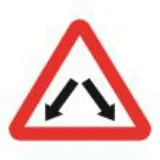
- Roundabout direction of travel.
- Divided road. Correct answer
- Two-way road.
No. 716中文
Regarding the definition and location of the 'deceleration lane' on freeways or expressways, which of the following is correct?
- A lane set between the main lane and a ramp, used by vehicles before entering the main lane.
- A lane set between the main lane and a ramp, used by vehicles after leaving the main lane and before entering the ramp. Correct answer
- A lane set at the exit of the main lane, for vehicles to merge onto the main lane.
No. 717中文
The sign in the figure is?
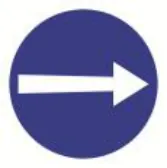
- One-way road.
- Direction of travel. Correct answer
- Indication of detour direction.
No. 718中文
Which of the following statements about interchanges is incorrect?
- It refers to the section where freeways and expressways interconnect with each other, or where a freeway or expressway connects with other roads, forming a grade-separated intersection constructed with ramps.
- The speed limit is generally 40–60 km/h.
- It refers to a lane set at the far right of the main carriageway entrance, for vehicles to accelerate before merging onto the main carriageway. Correct answer
No. 719中文
A 'No Entry for Any Vehicle' sign is posted at a road entrance. Which of the following vehicles may enter in compliance with regulations?
- Motorcycles are small in size and may enter the road section by slowing down.
- No vehicle may enter, but fire trucks, ambulances, and other emergency vehicles on urgent duty are not restricted. Correct answer
- This sign only prohibits automobiles from entering; bicycles and motorcycles are not subject to the restriction.
No. 720中文
Regarding the function of a 'road width transition line,' which of the following descriptions is correct?
- Drawn with yellow dashed lines to warn that the road ahead is under construction and to slow down.
- Warns drivers that the road narrows or the number of lanes decreases, so they should drive cautiously, and overtaking is prohibited. It is drawn as a double solid yellow line or a yellow dashed line alongside a yellow solid line, with a line width and spacing of 10 cm. Correct answer
- Drawn with double white solid lines at locations where the number of lanes decreases, prohibiting vehicles from crossing over to change lanes.
No. 721中文
When a vehicle drives into a multi-lane roundabout, which of the following is correct?
- Vehicles in the outer lane should be given the right of way first.
- Vehicles in the inner lane should be given the right of way first. Correct answer
- Vehicles that have not yet entered the roundabout should be given the right of way first.
No. 722中文
Regarding the correct driving behavior for large vehicles on freeways or expressways, which option is correct?
- They should drive in the outer lane.
- They may temporarily use the lane immediately adjacent to the outer lane to overtake the vehicle ahead.
- All of the above. Correct answer
No. 723中文
Which of the following is the sign for a one-way street?

- First image
- Second image
- Third image Correct answer
No. 724中文
Regarding the maximum speed limit on national freeways, which of the following statements is correct?
- 120 kilometers per hour.
- As indicated by speed limit signs. Correct answer
- 110 kilometers per hour.
No. 725中文
When a driver encounters the transverse road markings shown in the figure on the road, how should they respond?
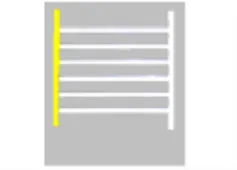
- Slow down. Correct answer
- Speed up and pass through.
- Check the tires.
No. 726中文
When a vehicle intends to enter the main lane of a freeway from an interchange, service area, or rest area, how should it travel in the acceleration lane?
- Accelerate and enter immediately.
- Gradually accelerate to the end of the lane, stop and wait, then enter.
- Gradually accelerate, assess traffic conditions, confirm a safe gap, then enter. Correct answer
No. 727中文
Regarding the difference between a 'lane line' and a 'directional dividing line,' which of the following is correct?
- A 'lane line' divides lanes in the same direction for vehicles traveling in the same direction; a 'directional dividing line' divides opposing traffic flows and separates vehicles traveling in opposite directions. Correct answer
- A 'lane line' divides opposing traffic flows and prohibits vehicles from crossing into the opposing lane; a 'directional dividing line' divides lanes in the same direction.
- Both are used to divide lanes in the same direction; the only difference is the speed limit of the road section where they are installed.
No. 728中文
The sign in the figure indicates:
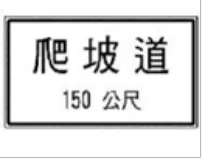
- The leftmost lane 150 meters ahead is a dedicated climbing lane for slow vehicles.
- The rightmost lane 150 meters ahead is a dedicated climbing lane for slow vehicles. Correct answer
- The rightmost lane 150 meters ahead is a dedicated climbing lane for fast vehicles.
No. 729中文
On freeway sections with a speed limit of 90 km/h or above, where should small vehicles traveling below 80 km/h drive?
- The inner lane.
- The outer lane. Correct answer
- Either of the above.
No. 730中文
Which of the following statements about acceleration lanes on highways or expressways is incorrect?
- They are exclusively for vehicles to accelerate before merging from a ramp onto the main lane.
- They are located between the ramp and the main lane.
- They are for vehicles to accelerate when exiting the main lane. Correct answer
No. 731中文
Which of the following is NOT indicated by the sign shown in the image?
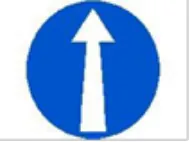
- Direction of travel to follow.
- Straight ahead only.
- One-way road. Correct answer
No. 732中文
A driver traveling on a narrow road section sees a 'No Passing of Oncoming Vehicles' sign posted, but an oncoming vehicle has already entered that section. What should the driver do?
- Accelerate to pass first and avoid the two vehicles traveling side by side on the narrow section.
- Stop and wait for the oncoming vehicle to pass through first, then enter that section. Correct answer
- Both vehicles slow down simultaneously and carefully pass each other slowly.
No. 733中文
The sign in the image is:
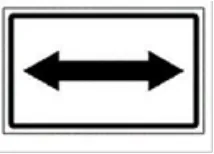
- No Passing of Oncoming Vehicles.
- Two-way traffic.
- Left and right turn directions. Correct answer
No. 734中文
A driver sees an orange-background 'Detour Direction' sign ahead while driving. Which of the following statements is correct?
- It is a permanently installed compliance sign indicating the road has permanently changed its traffic direction.
- It is a temporary construction sign indicating road construction ahead; drivers must detour in the direction of the arrow. Correct answer
- It is an advisory sign; drivers may decide for themselves whether to detour.
No. 735中文
When a small vehicle is traveling on a freeway or expressway and does not impede traffic flow, it may travel at the maximum speed limit of that road section in the overtaking lane. Which of the following is the overtaking lane on a freeway or expressway?
- The innermost lane. Correct answer
- The outermost lane.
- The middle lane.
No. 736中文
For motor vehicles with four or more wheels, except when starting, preparing to turn, preparing to stop, or making a temporary stop, which of the following statements about driving in the slow lane is correct?
- It may be driven on roads with a median island separating fast and slow lanes. Correct answer
- It may be driven on roads with a marked dividing line separating fast and slow lanes.
- Both of the above are permitted.
No. 737中文
When attempting to overtake the vehicle ahead in the same lane, how should you proceed?
- As long as there is sufficient safe distance, you may directly accelerate to overtake.
- First sound the horn twice in single beeps or flash the headlights once, and only overtake after the vehicle ahead slows down and moves to the side or signals with a hand gesture to allow passing. Correct answer
- You only need to approach the vehicle ahead and flash the high beams to notify it; you may overtake without waiting for a response.
No. 738中文
When a motor vehicle is traveling on a two-way two-lane road without a designated slow lane, on a straight section marked with a centerline, which of the following statements about overtaking is correct?
- Overtaking is prohibited, and crossing the centerline is also not permitted.
- When overtaking, the centerline may be crossed, but parallel racing is not allowed. Correct answer
- When overtaking, the centerline may be crossed, and parallel racing is also permitted.
No. 739中文
A road has a 'Vehicle Gross Weight Limit' sign indicating a limit of 10 metric tons. Which of the following statements correctly defines 'gross weight'?
- 'Gross weight' refers to the weight of the cargo loaded onto the vehicle, excluding the weight of the vehicle body itself.
- 'Gross weight' refers to the total of the vehicle's own unladen weight plus the weight of passengers, cargo, and other loaded items. Correct answer
- 'Gross weight' refers to the unladen weight of the vehicle as it left the factory, excluding any loaded items.
No. 740中文
When driving and seeing the sign shown on the left, what does it inform the driver?
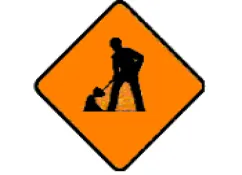
- Vehicles should take a detour.
- The road ahead is closed.
- There is construction ahead. Correct answer
No. 741中文
According to speed limit signs or road markings, where there are no signs or markings, the driving speed must not exceed how many kilometers per hour?
- 70 km/h.
- 60 km/h.
- 50 km/h. Correct answer
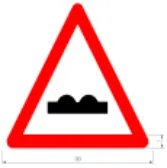
No. 742中文
When a vehicle encounters the sign shown on the left while driving, which of the following is correct?
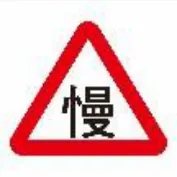
- Vehicles should slow down. Correct answer
- Pedestrians should pass slowly.
- Both vehicles and pedestrians must pass slowly.
No. 743中文
Traffic control personnel may use hand signals to direct moving vehicles. What does the hand signal shown in the figure indicate?
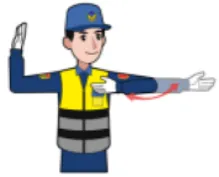
- Vehicles coming from the left turn left. Correct answer
- Vehicles coming from the left turn right.
- All vehicles stop.
No. 744中文
When a vehicle encounters the sign shown on the left while driving, which of the following is safer?
- Drive according to the speed limit.
- Slow down. Correct answer
- Accelerate and pass.
No. 745中文
When starting to drive, how should the driver adjust their visual distance to comply with safe driving principles?
- The visual distance should be kept very short and does not need to change with speed.
- Keeping the visual distance fixed is sufficient.
- The visual distance should increase as speed increases. Correct answer
No. 746中文
When reversing a vehicle, how should the driver warn other vehicles or pedestrians?
- Sound the horn 3 long blasts.
- Display the reverse lights, or the driver should extend the left arm horizontally with the palm facing backward and swing it back and forth. Correct answer
- Sound the horn continuously.
No. 747中文
What does this sign, marking, or signal mean?
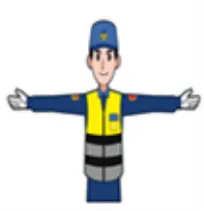
- Vehicles coming from the front stop.
- All vehicles stop.
- Vehicles coming from the front and rear stop; vehicles coming from the left and right proceed. Correct answer
No. 748中文
Reaction distance plus braking distance equals?
- Meeting interval distance.
- Travel distance.
- Stopping distance. Correct answer
No. 749中文
Under normal weather conditions, when a small car is traveling on a freeway or expressway at 90 km/h, what is the minimum safe following distance that should be maintained between two consecutive vehicles?
- 30 meters or more.
- 45 meters or more. Correct answer
- 60 meters or more.
No. 750中文
When driving on a freeway or expressway, may a vehicle overtake the vehicle ahead in an acceleration lane, deceleration lane, or single-lane ramp?
- Yes, vehicles may overtake freely in these lanes.
- Yes, but only when the speed is very slow.
- No, these lanes may not be used for overtaking. Correct answer
No. 751中文
Regarding the safe following distance between the front and rear vehicles for a small vehicle driving on a freeway or expressway, which of the following is correct under normal weather conditions?
- The vehicle's speed in km/h divided by 2 (unit: meters). Correct answer
- The vehicle's speed in km/h minus 20 (unit: meters).
- The safe distance is up to the driver's own judgment; there is no regulation.
No. 752中文
A driver travels along a road section where a median island or obstacle is set in the centre of the road and sees a 'Keep Right' compliance sign. Which of the following statements is correct?
- Vehicles must pass to the right side of the obstacle or median island and must not enter the left side. Correct answer
- The sign merely reminds drivers of the customary right-hand traffic practice in our country; drivers may choose to pass on either the left or right according to road conditions.
- The sign indicates that the road ahead is one-way, and all vehicles may only travel in the same direction.
No. 753中文
When driving on a road that has a minimum speed limit sign, which of the following is correct?
- A driver who drives below the minimum speed limit shall be fined. Correct answer
- Driving below the speed limit is acceptable as long as it does not affect traffic safety.
- Driving at low speed is safer and does not constitute a violation.
No. 754中文
A 'unidirectional no-overtaking line' consisting of a solid yellow line and a dashed yellow line drawn side by side in the centre of the road — regarding the traffic regulations for vehicles on both sides, which of the following is correct?
- Vehicles on both the solid-line side and the dashed-line side are prohibited from crossing over to overtake, with the same effect as a double solid yellow line.
- Vehicles on the solid-line side are prohibited from crossing over to overtake; vehicles on the dashed-line side may cross over to overtake when it is safe to do so. Correct answer
- Vehicles on the dashed-line side are prohibited from crossing over to overtake; vehicles on the solid-line side may cross over to overtake when it is safe to do so.
No. 755中文
Both 'Road Hump' and 'Rough Road' are warning signs for road surface conditions. Which of the following correctly describes the difference between the two?
- 'Road Hump' indicates a localized, prominent raised surface ahead; 'Rough Road' indicates a continuously uneven surface ahead. Drivers should slow down for both. Correct answer
- Both signs describe the same road condition; only the speed limit of the posted section differs. Drivers may maintain their current speed.
- 'Road Hump' indicates a continuously uneven surface ahead; 'Rough Road' indicates a localized raised surface. Drivers should accelerate quickly through both to reduce the sensation of bumping.
No. 756中文
What does this sign represent?
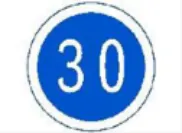
- Minimum speed limit. Correct answer
- Maximum speed limit.
- Motorcycle speed limit.
No. 757中文
What does it mean when headlight beams shine farther at night?
- There is an uphill section ahead.
- There is a downhill section ahead. Correct answer
- The road surface ahead is flat.
No. 758中文
What is this sign?
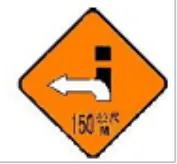
- Road closed.
- Vehicle detour. Correct answer
- No motor vehicles entry.
No. 759中文
When a motor vehicle reaches a controlled road, what are the traffic rules for passage?
- Remove the control facilities yourself and pass freely.
- Travel in accordance with the traffic control regulations indicated by official notices or signs. Correct answer
- You may pass whenever no control personnel are present.
No. 760中文
What is the meaning of the yellow road marking shown in the figure?
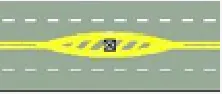
- Approach obstacle line. Correct answer
- Stop line.
- Lane line.
No. 761中文
Which of the following is correct regarding the effects of rapid vehicle acceleration on the vehicle and fuel consumption?
- It can improve fuel efficiency and make the vehicle more fuel-efficient.
- It increases fuel consumption and reduces driving efficiency. Correct answer
- It has no significant effect on fuel consumption and only affects driving speed.
No. 762中文
When a vehicle is traveling on a two-way two-lane road marked with directional restriction lines:
- When there is no oncoming traffic, the vehicle may enter the oncoming lane to overtake.
- It is prohibited to enter the oncoming lane. Correct answer
- The vehicle may travel freely in any lane.
No. 763中文
The white double solid line 'no lane change line' drawn between lanes in the same direction is most commonly installed on which of the following road sections?
- Near intersections, ramp entrances and exits, or accident-prone sections, to prevent vehicles from changing lanes arbitrarily and affecting traffic safety. Correct answer
- Straight sections in suburban areas with low traffic volume, reminding drivers to stay in the same lane.
- All roads with a central median island, used to separate opposing traffic directions.
No. 764中文
For large heavy motorcycles with a total engine displacement of 550cc or above, when traveling on freeways or expressways:
- As long as a safe following distance is maintained, they may ride side by side or overtake within the same lane.
- They must travel in sequence within the same lane as required, and are not permitted to ride side by side or overtake within the same lane. Correct answer
- When traffic volume is low, they may ride side by side or overtake within the same lane.
No. 765中文
A driver is traveling on a road section marked with a 'No Passing' sign. Which of the following actions still constitutes a violation?
- Passing a slower vehicle ahead by using the same-direction lane without crossing the road centerline.
- A vehicle ahead has broken down and stopped on the roadside; the driver passes it by going around its left side.
- Passing the vehicle ahead from the left lane in the same direction at a speed higher than the vehicle in front, then immediately returning to the original lane. Correct answer
No. 766中文
Regarding a driver's use of 'driving assistance display devices' while operating a vehicle on the road, which of the following statements is correct?
- As long as it is factory-installed equipment, the driver may operate the driving assistance display device freely while the vehicle is in motion.
- Settings for the driving assistance display device should be completed before departure; operating the device while the vehicle is in motion is prohibited. Correct answer
- The driving assistance display device may be continuously watched or operated while the vehicle is in motion as a substitute for paying attention to road conditions.
No. 767中文
Regarding the description of the difference between white arrow 'directional guide lines' painted on the road surface before an intersection and 'lane-use arrow markings' painted within a lane, which of the following is correct?
- 'Directional guide lines' are mandatory; vehicles must travel in the direction of the arrow and may not change to another lane.
- 'Directional guide lines' serve to pre-announce the direction to be taken at the upcoming intersection, guiding drivers to move into the appropriate lane in advance; 'lane-use arrow markings' strictly restrict that lane to vehicles traveling in the arrow direction only. Correct answer
- Both serve the same function; they differ only in arrow size and placement location.
No. 768中文
Regarding the regulations on seatbelt usage by passengers inside a large bus traveling on a highway or expressway, which of the following is correct?
- Only the driver and front-seat passengers are required to wear seatbelts.
- The driver and all passengers aged 4 and above must wear seatbelts. Correct answer
- Only the driver is required to wear a seatbelt; passengers may choose at their own discretion.
No. 769中文
A median island is installed in the center of the road, with 'Keep Right' and 'Keep Left' compliance signs placed at each end of the median island respectively. Which of the following descriptions of their placement is correct?
- Both signs are placed on the same side, and the driver chooses which one to follow based on vehicle speed.
- The 'Keep Right' sign is placed at the approaching end, directing vehicles to pass on the right side; the 'Keep Left' sign is placed at the departing end, guiding vehicles back to their original lane. Correct answer
- Both signs serve the same function; the arrows point in opposite directions only because the road runs in different directions, without affecting the actual travel route.
No. 770中文
When two cars meet on a narrow mountain road, which of the following rules regarding right of way is correct?
- Vehicles close to the mountain wall should yield to vehicles on the outer edge of the road. Correct answer
- Vehicles on the outer edge of the road should yield to vehicles close to the mountain wall.
- Uphill vehicles must unconditionally yield to downhill vehicles.
No. 771中文
In the concept of defensive driving, what does 'safety margin' refer to?
- The physical boundary on both sides of the road separating the lane from the sidewalk.
- The buffer limit available to the driver when danger arises due to negligence regarding various driving factors. Correct answer
- The maximum protection radius when a vehicle's airbag deploys.
No. 772中文
What is the meaning of the freeway guide sign with white text on a green background shown in the image?
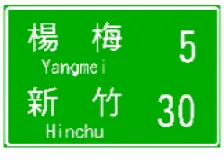
- It indicates directions to two exits ahead, which are Yangmei and Hsinchu, with distances of 5 km and 30 km to those exits respectively. Correct answer
- It indicates that the minimum speed limit for this section is 5 km/h and the maximum speed limit is 30 km/h.
- It indicates that both Yangmei and Hsinchu are weigh station locations, and the rest stop is 30 km away.
No. 773中文
What is the meaning of the sign with a red circle and white background shown in the image?
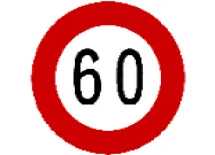
- Minimum speed limit.
- Maximum speed limit. Correct answer
- Maintain a safe distance of 50 metres.
No. 774中文
The yellow grid lines painted at an intersection represent a prohibition against which of the following behaviours?
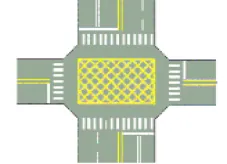
- Notifying vehicle drivers that temporary stopping is prohibited within the marked area, and the intersection must be kept clear. Correct answer
- Notifying that the area is a designated bus stop zone.
- Notifying that overtaking is prohibited on this road section.
No. 775中文
When a driver encounters a red light, they must stop and wait before the stop line. Which of the following correctly describes the proper stopping position?
- The front wheels of the vehicle should be aligned with the stop line to give the driver the best intersection visibility.
- The entire vehicle must stop behind the stop line, and no part of the vehicle may cross it. Correct answer
- Only the rear axle needs to remain behind the stop line; the front of the vehicle extending beyond the stop line does not constitute a violation.
No. 776中文
A driver traveling on a road section marked with a double solid yellow 'direction restriction line' wishes to turn left into an alley on the opposite side. What should the driver do?
- After activating the left turn signal, the driver may cross the double solid yellow line and turn left into the alley.
- The driver must not cross the double solid yellow line and should find another appropriate legal intersection to make a U-turn or take a detour. Correct answer
- When the vehicle speed is below 20 km/h, the driver may briefly cross the double solid yellow line to turn left into the alley.
No. 777中文
On a freeway or expressway, what is the lane designated for vehicles to travel straight called?
- Deceleration lane.
- Climbing lane.
- Main travel lane. Correct answer
No. 778中文
When driving at high speed, how does the driver's dynamic vision change?
- Vision remains the same as at idle speed, with no effect whatsoever.
- The faster the speed, the wider the driver's field of vision and the clearer the distant scenery.
- The faster the speed, the narrower the driver's field of view becomes (tunnel vision effect), significantly reducing sensitivity to objects on both sides. Correct answer
No. 779中文
What does a solid yellow line marked at the edge of the road indicate?
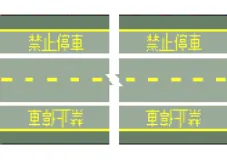
- No stopping line (equivalent to a red curb; temporary stopping is prohibited).
- No parking line (yellow line; brief temporary stopping is permitted). Correct answer
- Yield line.
No. 780中文
When a vehicle is traveling on a freeway, expressway, or a road with controlled access points, and fails to maintain the required safe following distance, which of the following penalties is correct?
- A fine of NT$1,200–2,400 and suspension of the driver's license for 1 month.
- A fine of NT$3,000–6,000. Correct answer
- A fine of NT$6,000–12,000 and immediate revocation of the driver's license on the spot.
No. 781中文
When driving inside a tunnel:
- No lights needed during daytime; lights only at night to save electricity.
- Turn on lights and slow down for safety.
- Turn on headlights and drive at the designated speed limit. Correct answer
No. 782中文
May a vehicle in the inner lane use the outer lane to overtake?
- No. Correct answer
- Yes.
- No regulation.
No. 783中文
When encountering another vehicle on a narrow road:
- Rush ahead to force the other to yield.
- Slow down and find a wider section to stop and yield. Correct answer
- Honk loudly to warn the other to yield.
No. 784中文
On a two-way road with two lanes, if you intend to overtake the vehicle ahead but see an oncoming vehicle, you should:
- Immediately slow down and abandon the overtake. Correct answer
- Immediately speed up to overtake first.
- Honk to urge the oncoming vehicle to slow down or give way.
No. 785中文
Under what circumstances may a vehicle drive on the left side of the directional dividing line?
- When there is a parked vehicle or obstacle on the right side within the lane and no oncoming traffic. Correct answer
- Going uphill or downhill.
- Preparing to park.
No. 786中文
On an empty suburban road late at night with no traffic or pedestrians:
- You may exceed the speed limit.
- You must still drive within the speed limit. Correct answer
- You may slightly exceed the limit but should not go too fast.
No. 787中文
Vehicle speed shall be governed by posted speed limit signs or pavement markings. Where no such signs or markings are present, the speed shall not exceed 50 km/h. However, on roads without lane lines, directional separation lines, or directional restriction lines, the speed shall not exceed:
- 40 km/h
- 50 km/h
- 30 km/h Correct answer
No. 788中文
When following a vehicle approaching a railway level crossing, you should wait until the preceding vehicle has cleared by how far before crossing?
- 5 meters.
- A sufficient distance to safely cross. Correct answer
- 15 meters.
No. 789中文
After seeing a railway level crossing sign or marking, the driver should reduce speed to:
- 15 km/h or below. Correct answer
- 20 km/h or below.
- 30 km/h or below.
No. 790中文
On a road with two or more lanes in the same direction, a slower small vehicle should drive in:
- The inner lane.
- The outer lane. Correct answer
- The slow vehicle lane.
No. 791中文
On a road with two or more lanes in the same direction, small vehicles should drive in:
- The inner lane.
- The outer lane.
- Either the inner or outer lane, but must not change lanes freely. Correct answer
No. 792中文
The regulation for honking a car's horn:
- Must not honk 3 or more times consecutively. Correct answer
- Must not honk 4 or more times consecutively.
- Must not honk 5 or more times consecutively.
No. 793中文
Each honk must not last longer than:
- 2 seconds.
- 1 second.
- Half a second. Correct answer
No. 794中文
When following another vehicle in the same lane, the distance between vehicles should be:
- At least 1 meter.
- At least 5 meters.
- A distance that allows immediate stopping. Correct answer
No. 795中文
Unless driving on a one-way road or designated left-side lane, on a road without directional markings:
- Drive on the right. Correct answer
- Drive on the left.
- Drive in the center.
No. 796中文
When special circumstances require driving on the left side of the road:
- Speed up.
- Slow down and watch for oncoming vehicles and pedestrians. Correct answer
- Honk frequently to alert oncoming traffic.
No. 797中文
When meeting another vehicle on a steep narrow slope:
- The downhill vehicle should yield to the uphill vehicle. Correct answer
- The uphill vehicle should yield to the downhill vehicle.
- Neither needs to yield.
No. 798中文
When meeting another vehicle on a road without traffic direction markings, at a railway level crossing, or on a poor road, you should:
- Speed up.
- Slow down. Correct answer
- Drive normally.
No. 799中文
When driving downhill:
- Turn off the engine and coast in neutral to save fuel.
- For safety, never turn off the engine and coast in neutral. Correct answer
- No gear change needed.
No. 800中文
On a two-way two-lane road with a directional restriction line:
- You must not cross into the oncoming lane. Correct answer
- You may cross into the oncoming lane.
- You may cross if there is no oncoming traffic.
No. 801中文
When two vehicles meet, the gap between them must not be less than:
- 2 meters.
- 1 meter.
- Half a meter. Correct answer
No. 802中文
Before changing lanes, you should first:
- Honk.
- Flash lights.
- Display the turn signal or hand signal. Correct answer
No. 803中文
No temporary stopping is allowed within how many meters of an intersection or bus stop?
- 10 meters. Correct answer
- 20 meters.
- 30 meters.
No. 804中文
If a driver fails to yield to or slow down for a vehicle dedicated to transporting young children or a school bus as required, and is cited on the spot, in addition to recording demerit points, the penalty is:
- A fine. Correct answer
- Revocation of the driver's license.
- Suspension of the driver's license.
No. 805中文
When a motor vehicle driver is caught speeding and cited on the spot, they shall be subject to:
- A fine.
- Demerit points recorded only, with no fine.
- A fine and demerit points recorded. Correct answer
No. 806中文
While driving on a freeway, if you suddenly discover your vehicle's performance has declined and cannot maintain 60 km/h:
- Immediately take the nearest interchange to exit the freeway to avoid being rear-ended. Correct answer
- Stop immediately for repairs.
- Continue driving.
No. 807中文
When changing lanes on a freeway or expressway, in addition to displaying the turn signal, the most important thing is:
- Merge into any available space immediately.
- Only watch for the safe distance from the vehicle ahead.
- Watch for safe distances from both the vehicle ahead and vehicles approaching from behind. Correct answer
No. 808中文
Defensive driving is:
- Taking reasonable and prudent action to prevent an accident before it occurs. Correct answer
- Excellent driving technique.
- Good lifestyle habits.
No. 809中文
When entering the main lane of a freeway or expressway:
- First slow down in the acceleration lane, confirm safety, then merge.
- Display the left turn signal and merge immediately.
- First accelerate in the acceleration lane, confirm safety, then merge. Correct answer
No. 810中文
When leaving the main lane of a freeway or expressway:
- Turn off at any time.
- Move to the right lane first, gradually reduce speed, and exit. Correct answer
- Display the right turn signal and exit immediately.
No. 811中文
While driving at night, if the light projected on the road ahead disappears, it may indicate a broken road, collapsed bridge, or road surface collapse. For safety:
- Stop and check before proceeding. Correct answer
- Continue without concern.
- Turn off headlights to avoid reflections.
No. 812中文
Why does maintaining a proper following distance prevent accidents?
- Following the vehicle ahead prevents getting lost.
- It provides sufficient reaction time and space. Correct answer
- It keeps you close to the vehicle ahead.
No. 813中文
The minimum safe following distance must be:
- Greater than. Correct answer
- Less than.
- Equal to. the stopping distance.
No. 814中文
While driving, you should:
- Look straight ahead and watch for vehicles from left and right. Correct answer
- Look around and eat food.
- Chat and play with the passenger beside you.
No. 815中文
While driving, you should pay attention to:
- Shops along the road.
- Signals, signs ahead, and surrounding traffic dynamics. Correct answer
- Scenery around you.
No. 816中文
When driving at night, the hardest target for a driver to spot is:
- A moving pedestrian.
- A standing person. Correct answer
- A moving vehicle.
No. 817中文
When hard braking causes the wheels to lock up, the braking distance:
- Shortens.
- Becomes longer. Correct answer
- Remains unchanged.
No. 818中文
The most important principle of driving is:
- The slower the better.
- Maintaining a safe following distance from the vehicle ahead. Correct answer
- Following the vehicle ahead closely is less error-prone.
No. 819中文
When driving through a tunnel 4 km or longer or one announced by the management authority, small vehicles should maintain a following distance of at least:
- 40 meters.
- 50 meters. Correct answer
- 60 meters.
No. 820中文
In a tunnel 4 km or longer or one announced by the management authority, when traffic slows below 20 km/h or stops due to congestion or an accident, vehicles should still maintain at least:
- 20 meters. Correct answer
- 30 meters.
- 50 meters.
No. 821中文
When driving on a suburban road without speed limit signs:
- Drive at your preferred speed.
- Speeding is allowed if in a hurry.
- Speed must not exceed 50 km/h. Correct answer
No. 822中文
On a freeway or expressway under normal weather, the safe following distance for small vehicles is calculated by taking the speed in km/h and:
- Dividing by 2. Correct answer
- Dividing by 3.
- Dividing by 4. to get the distance in meters.
No. 823中文
A motor vehicle driver on a freeway who fails to maintain a safe following distance and causes a fatal accident shall:
- Have their driver's license suspended.
- Have their driver's license revoked. Correct answer
- Have their vehicle license plate revoked.
No. 824中文
When passing through a construction zone, the speed should:
- Be the normal driving speed.
- Follow the original road's maximum speed limit.
- Follow the construction zone's maximum speed limit sign and drive carefully. Correct answer
No. 825中文
When driving through a tunnel 4 km or longer or one announced by the management authority, large vehicles should maintain a following distance of at least:
- 40 meters.
- 50 meters.
- 100 meters. Correct answer
No. 826中文
While driving in the fast lane, if a micro electric two-wheeler approaches, you should:
- Ignore it and continue.
- Honk for a long time as a warning.
- Slow down and watch its movements. Correct answer